
When a case goes to trial in another city, the law firm inherits a second job it never trained for: running a temporary field office. Hotels, war-room space, exhibit shipments, printing at midnight, network security, meals for a team that is not leaving the building. Trial concierge services exist to take that second job off the firm’s hands, and most litigators have only a fuzzy sense of what the term actually covers. This guide draws the line clearly.
The short version: a trial concierge handles everything about trying a case that is not the practice of law. The value is not luxury. It is the recovery of the trial team’s attention at the exact moment their attention is worth the most.
The Logistics Backbone
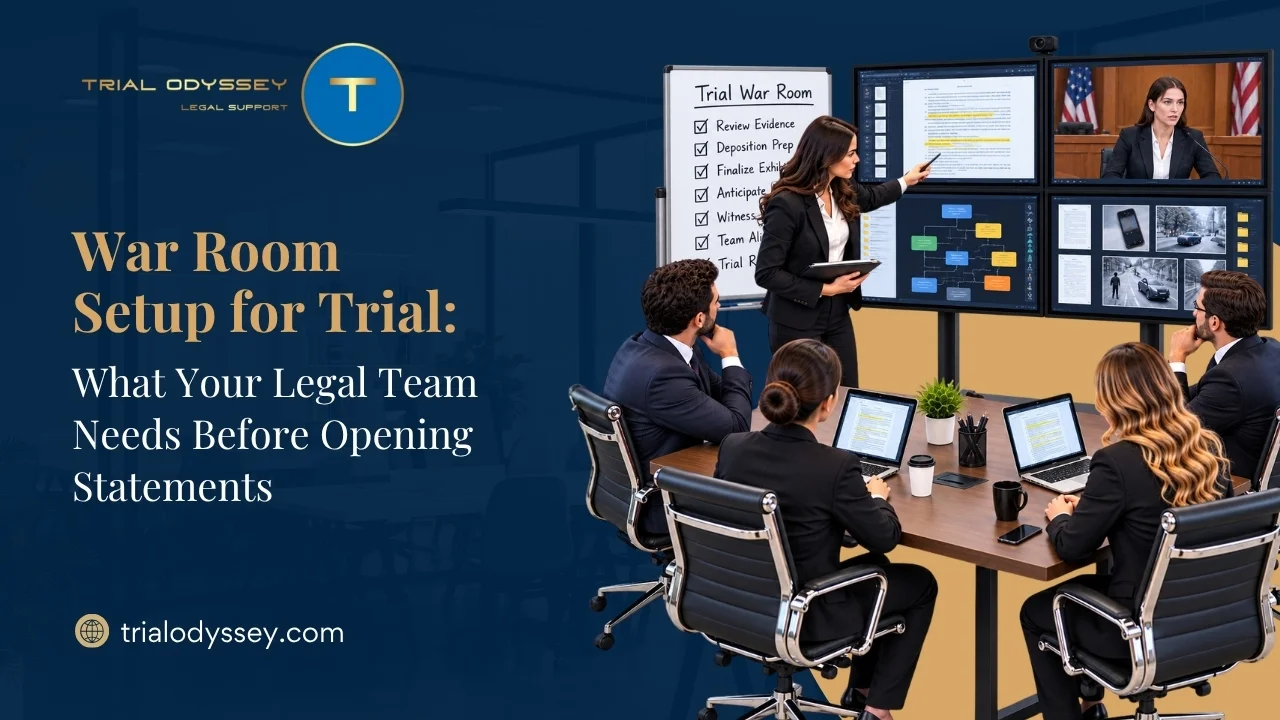
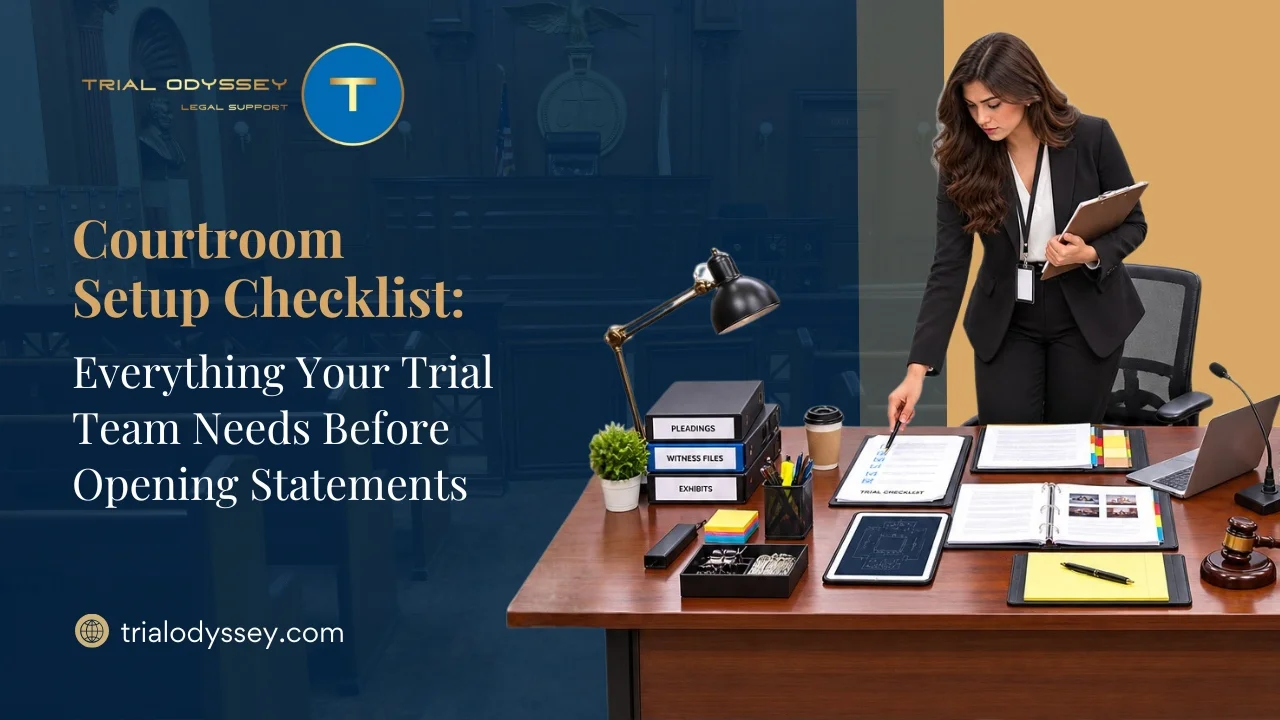
At its core, a trial concierge service manages the physical infrastructure of an out-of-town trial. That starts with securing and setting up the war room and any hotel or office space, negotiating the contracts, and handling the cancellation and attrition terms that catch firms out when a trial settles early or runs long. It extends to the movement of everything the case depends on: transporting exhibits, equipment, and materials between the firm’s office, the war room, and the courthouse, including the daily courthouse delivery, pickup, and return that a multi-week trial requires.
This is unglamorous, high-consequence work. A box of exhibits on the wrong truck is not an inconvenience; it is a morning of trial the team spends recovering instead of arguing.
Technology, Networks, and Reprographics
The second layer is technical. Trial concierge services typically stand up the war room’s infrastructure: secure wired and wireless networks built to the firm’s security standards, workstations, high-capacity copiers, and the connectivity a trial team cannot function without. Good providers coordinate directly with the firm’s in-house IT rather than working around it, so the temporary setup respects the same protocols the firm uses everywhere else.
Reprographics belong here too. Trial runs on paper even in an electronic courtroom, and the ability to print, tab, and assemble binders on short notice, overnight when the trial day demands it, is part of what the firm is buying.
The Hospitality Layer
Then there is the part the name evokes. Trial hospitality covers the human logistics of a team living out of a war room for weeks: catering and stocked meals, dietary needs tracked so no one loses an hour hunting for lunch, travel and ground transport, lodging coordination, and the small errands, deliveries, and day-to-day tasks that otherwise fall to a paralegal who should be doing something else. Discretion runs through all of it, since the concierge team moves through spaces where confidential case material is always present.
It sounds like a perk. In practice it is time management. Every errand a concierge absorbs is an hour a senior associate keeps for the case.
Where the Concierge Line Stops
Being precise about the boundary matters, because it is where firms get confused. A trial concierge handles the operational and logistical scaffolding around a trial. It does not run the presentation inside the courtroom. Operating the hot seat, building demonstratives, and managing exhibits on the record during testimony are distinct in-court disciplines, related but separate. Many providers, including Trial Odyssey, offer both the concierge layer and the in-court trial support, which is efficient, but they are different services answering different needs, and a firm should know which one it is actually asking for.
What a Firm Is Really Buying
Trial concierge services come down to a single trade: the firm pays an outside team to run the field office so its lawyers can try the case. For a local, short matter a firm can absorb that load itself. For an out-of-state trial, a multi-week schedule, or a team that cannot spare anyone to chase couriers and caterers, the math favors handing it off. Trial Odyssey structures its concierge solutions around that division, taking the operational weight so the trial team carries only the case. The firm shows up ready to work, and everything else is already handled.
Frequently Asked Questions
1.What does a trial concierge service handle?
Everything about trying a case that isn’t the practice of law: war-room and hotel setup, exhibit and equipment transport, secure networks, printing, catering, travel, and day-to-day errands during trial.
2.How is a trial concierge different from in-court trial support?
A concierge runs the logistical scaffolding around the trial. In-court support, operating the hot seat, building demonstratives, managing exhibits on the record, is a separate discipline, though many providers offer both.
3.Do I need a trial concierge for a local trial?
Usually not. The value shows up for out-of-state trials, multi-week schedules, or teams that can’t spare anyone to chase couriers and caterers.
4.Is confidentiality a concern with concierge staff?
It has to be built in. A concierge team moves through spaces where confidential case material is always present, so discretion is part of the service, not an add-on.
5.Can a trial concierge actually save the firm money?
Often, yes. A concierge negotiates the hotel and office-space contracts and manages the cancellation and attrition terms that catch firms out when a trial settles early or runs long. Consolidating the copier, IT, catering, and courier work under one accountable team also beats coordinating each vendor separately.