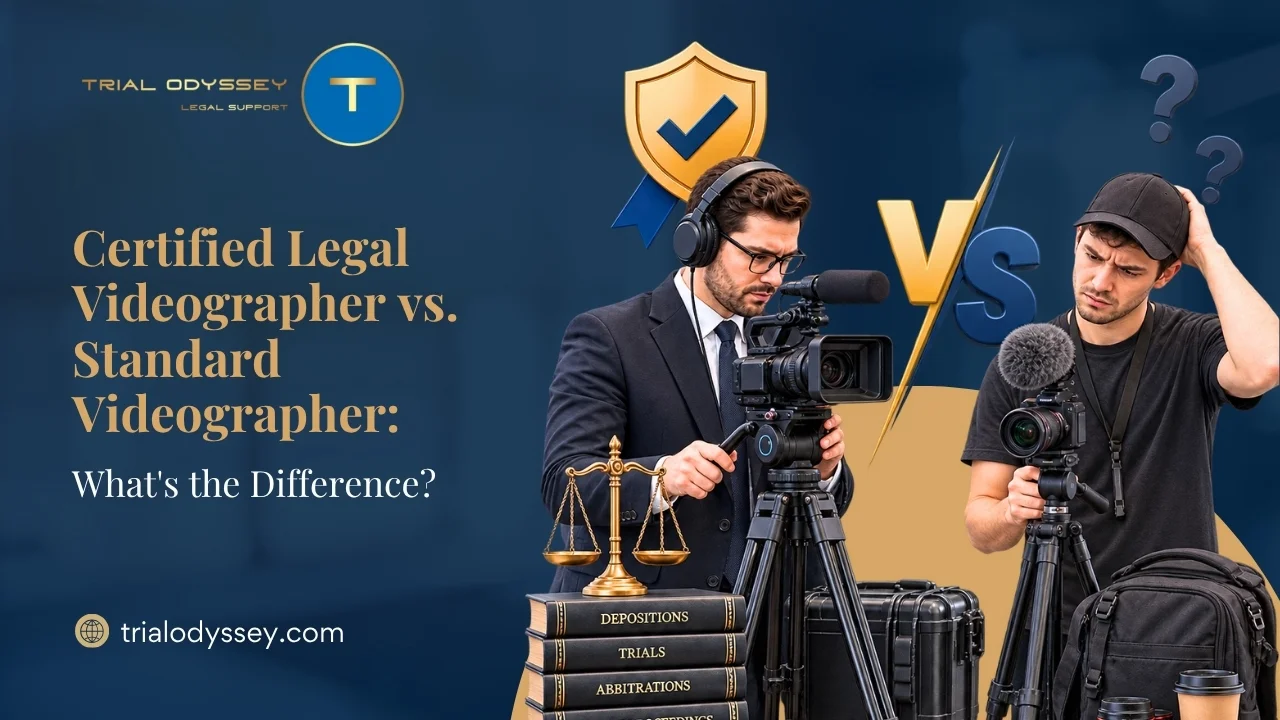
A wedding videographer and a certified legal videographer both point a camera at people and press record. That is where the similarity ends. One is producing a keepsake; the other is producing evidence that has to survive an authentication challenge and a motion to exclude. Hiring the first when you need the second is a mistake that does not show up until it is far too late to fix.
The word doing the work in that job title is “certified.” It is not a marketing flourish. In legal video, certification is shorthand for a specific set of competencies that determine whether a recording is usable in court, and understanding what it actually signals is worth a few minutes before you book anyone.
What “Standard” Videography Misses
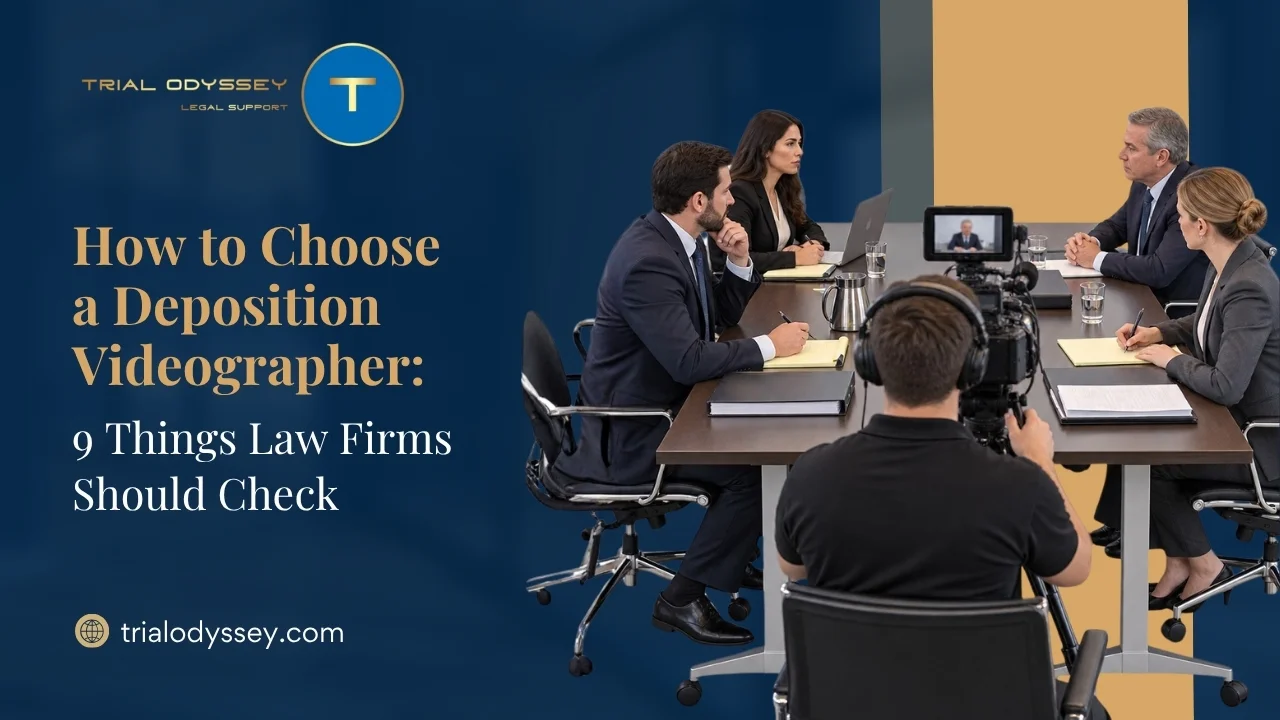
A skilled general videographer can light a room and capture crisp audio. What they usually cannot do is run a deposition to the standard the rules demand, because nothing in commercial or event work ever required it. They do not know that the officer has to open the record with a defined sequence of statements, repeat identifying statements at the start of each recording unit, and close the same way. They are unlikely to know that the deposition notice must state the recording method, or that a federal deposition is capped at one day of seven hours, or that the deponent’s appearance cannot be distorted through framing or editing.
None of that is a knock on their talent. It is simply a different job. A beautiful recording that violates deposition protocol is still an inadmissible recording, and the polish does not save it.
What Certification Actually Certifies
A certified legal videographer has been trained and tested on exactly the things a standard videographer has not. The recognized credential is the Certified Legal Video Specialist, or CLVS, administered by the National Court Reporters Association, which combines a mandatory workshop, a written knowledge test, and a hands-on production exam conducted at a staged deposition. The American Guild of Court Videographers runs a parallel track, including a Certified Deposition Video Specialist credential organized around Federal Rules of Civil Procedure 28, 30, and 32.
Both credentials certify the same underlying thing: that the videographer can capture a legal record correctly, maintain chain of custody, produce a proper officer’s certification, and stay neutral to the parties throughout. That neutrality is itself a requirement, not a courtesy. A videographer with a financial or personal interest in the case hands opposing counsel a reason to question the record.
The Admissibility Gap Is the Real Difference
Here is the honest version, because the marketing pages will not give it to you. No state actually requires a videographer to hold CLVS certification. So why insist on it? Because admissibility risk is not evenly distributed, and certification is how you manage the tail. Some judges specifically ask whether the videographer is certified. Some states require the person recording an official proceeding to be authorized to administer the oath for the video to come in, and California, for one, generally requires oath authority, usually notary credentials, when videotaping a treating physician or expert witness.
For a routine deposition that may never be played, a competent operator might be fine. For testimony that could reach a jury, or a witness you cannot re-depose, the certified legal videographer is cheap insurance against a record that fails when you need it most. Match the credential to the stakes.
One Warning: Not All “Certifications” Are Real
There is a trap in the middle. Some operators advertise “certified” using certificates from pay-to-play organizations that offer minimal training, no hands-on evaluation, and no standing any court recognizes. The credential is only as good as the body behind it. NCRA and AGCV are legitimate and testable. A certificate from an organization no one in the legal industry has heard of is a logo, not a qualification, so verify the issuing body before you rely on it.
Deciding for Your Case
The difference between a certified legal videographer and a standard one is not video quality. It is whether the recording does its job as evidence when challenged. Ask who is operating the camera, what body certified them, and whether they can administer the oath in the state where the deposition sits. If the answers are vague, keep looking. Trial Odyssey staffs its legal videography to these standards precisely so the question of admissibility is settled before the camera rolls, not litigated after.
Frequently Asked Questions
1.What certification should a deposition videographer hold?
Look for the CLVS from NCRA or a CDVS from the American Guild of Court Videographers. Both certify competence in deposition protocol under Federal Rules of Civil Procedure 28, 30, and 32.
2.Does the videographer need authority to administer the oath?
In some states, yes, for the video to be admissible. California, for example, generally requires oath authority, usually notary credentials, when videotaping a treating physician or expert witness.
3.How long can a video deposition last?
Under FRCP 30, a deposition is limited to one day of seven hours unless the parties or the court agree otherwise, and the notice must state the recording method.
4.Can a deposition be recorded remotely?
Yes, and it’s routine, but remote capture is harder to get right. Ask specifically how the videographer preserves a synchronized, court-ready record when the witness, counsel, and reporter are in different places.
5.What’s the difference between CLVS and CDVS?
Both certify deposition videography and both are recognized. The CLVS, from NCRA, requires an in-person production exam in Reston, Virginia, held twice a year. The CDVS, from the American Guild of Court Videographers, is online and self-paced and anchors a multi-track credential set. Many working videographers hold both.