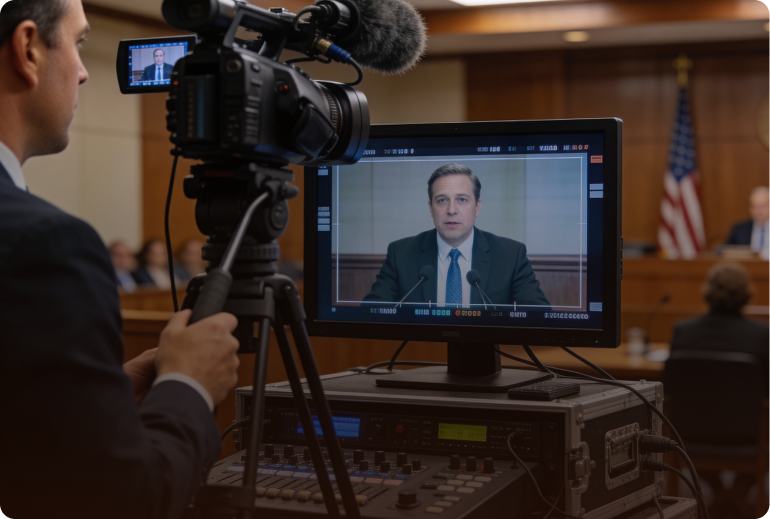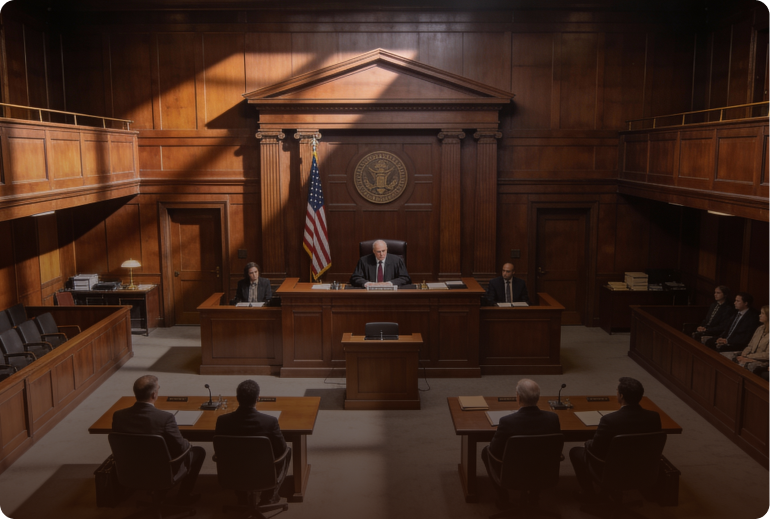
Courtrooms used to be places you went to.
Now, sometimes, they are places you log into.
A screen opens. Names appear. Someone unmutes. Someone forgets to. A witness joins from another city, another country, sometimes another time zone entirely.
And yet, the expectation remains unchanged.
Clarity. Precision. Control.
This is where virtual trial support starts to matter. Not as a backup to physical trials, but as its own environment with its own risks.
Because remote does not mean simpler.
It just means different.
The Courtroom Didn’t Disappear. It Expanded
The idea of a courtroom has stretched.
Part physical, part digital.
A judge in one location. Counsel in another. Evidence shared on screens rather than passed across desks.
Hybrid courtrooms are not temporary anymore. They are becoming routine.
Which creates a new kind of complexity.
Not just legal. Technical.
What Virtual Trial Support Actually Does
At first glance, it sounds like IT assistance.
Setting up calls. Managing screens. Handling connectivity.
But virtual trial support goes further than that.
It ensures:
- Evidence appears when needed
- Participants stay connected without disruption
- Transitions between speakers remain smooth
- Technology does not interrupt legal flow
Because in remote settings, even small technical issues feel larger.
A delay in sharing a document. A frozen screen. Audio breaking mid sentence.
These are not just inconveniences.
They interrupt argument.
Remote Trials Change the Pace
Physical courtrooms have rhythm.
Remote ones have friction.
People speak over each other more easily. Visual cues get missed. Pauses feel longer. Interruptions feel sharper.
The pace becomes uneven.
This is where remote trial technology plays a quiet role.
Not just enabling communication, but stabilising it.
Reducing lag. Managing transitions. Keeping everyone aligned despite physical distance.
Evidence Presentation Feels Different on Screen
Showing a document in court is one thing.
Sharing it on a screen is another.
Zoom levels matter. Highlighting matters. Navigation matters.
If the viewer cannot immediately understand what is being shown, the moment weakens.
Virtual courtroom services focus on this clarity.
Ensuring that documents are not just visible, but readable. Not just shared, but understood.
Because attention spans shrink faster on screens.
The Risk of Disconnection
In physical trials, presence is constant.
In virtual ones, presence depends on connection.
A participant drops. Audio cuts. Video freezes.
These moments break continuity.
More importantly, they create uncertainty.
Was the question heard? Was the answer complete? Did the judge catch that point?
Virtual trial support anticipates these risks.
Backup systems. Redundant connections. Immediate troubleshooting.
Not dramatic solutions.
Just quiet readiness.
Coordination Becomes More Complex
In a physical courtroom, coordination happens through proximity.
A glance. A note passed. A quick whisper.
Remote environments remove that layer.
Communication needs structure.
Private channels. Pre defined signals. Clear sequencing of speakers.
Without this, conversations overlap. Arguments lose sharpness.
Virtual courtroom services often include coordination planning, not just technical setup.
Hybrid Courtrooms Add Another Layer
Hybrid setups combine both environments.
Some participants are physically present. Others join remotely.
This creates imbalance.
Those in the room have natural presence. Those on screen risk being overlooked.
Managing this balance becomes part of execution.
Ensuring remote participants are heard clearly. Ensuring their materials are displayed without delay.
Because hybrid does not automatically mean equal.
It needs to be managed that way.
Preparation Looks Different in Virtual Trials
Preparation is no longer just about documents.
It includes:
- Testing technology in advance
- Ensuring compatibility across devices
- Structuring evidence for screen sharing
- Training participants on platform use
Trial preparation now includes technical readiness.
Because failure to prepare digitally leads to visible disruption.
Why Law Firms Are Adapting Quickly
Remote and hybrid trials are not occasional anymore.
They offer flexibility. Reduce travel. Expand access.
But they also demand new capabilities.
Firms are recognising that managing technology internally without dedicated support creates risk.
And risk, in trial settings, is rarely acceptable.
Final Reflection
Virtual trials change the environment.
But they do not change expectations.
Arguments still need clarity. Evidence still needs precision. Timing still matters.
Virtual trial support exists to ensure that technology does not interfere with these fundamentals.
Quietly. Continuously.
Because in a hybrid courtroom, the difference between control and confusion is often not legal strategy.
It is whether everything works when it is supposed to.
FAQs
- What is virtual trial support?
Virtual trial support involves managing technology, evidence presentation, and communication during remote or hybrid trials to ensure smooth execution without technical disruptions or delays. - How does remote trial technology help in litigation?
Remote trial technology enables seamless communication, document sharing, and evidence presentation, ensuring participants can engage effectively in virtual or hybrid courtroom environments. - What are virtual courtroom services?
Virtual courtroom services include technical setup, real-time support, evidence handling, and coordination to ensure trials run smoothly in digital or hybrid environments. - What challenges exist in hybrid courtrooms?
Hybrid courtrooms face challenges like communication gaps, unequal presence between in-person and remote participants, and technical disruptions affecting evidence presentation and trial flow. - Why is preparation important for virtual trials?
Preparation ensures stable connections, proper evidence formatting, and smooth coordination, reducing the risk of disruptions and helping maintain clarity and efficiency during remote proceedings.