What Nobody Talks About When They Talk About Winning at Trial
The post-trial debrief almost never mentions the war room.
It covers the closing argument, the key witness examinations, the exhibits that landed well, the jury dynamics that became apparent during voir dire. The conversation is about strategy and advocacy and legal skill.
The Hidden Operational Challenges of Trial Work
What it does not cover is the fact that the lead attorney was operating on four hours of sleep for the third consecutive night because the hotel room was too far from the war room and the printer ran out of toner at midnight. Or that two associates spent most of Tuesday morning trying to get the conference network working instead of preparing for Wednesday’s cross. Or that the team was eating vending machine food at 11pm because nobody had thought to arrange catering.
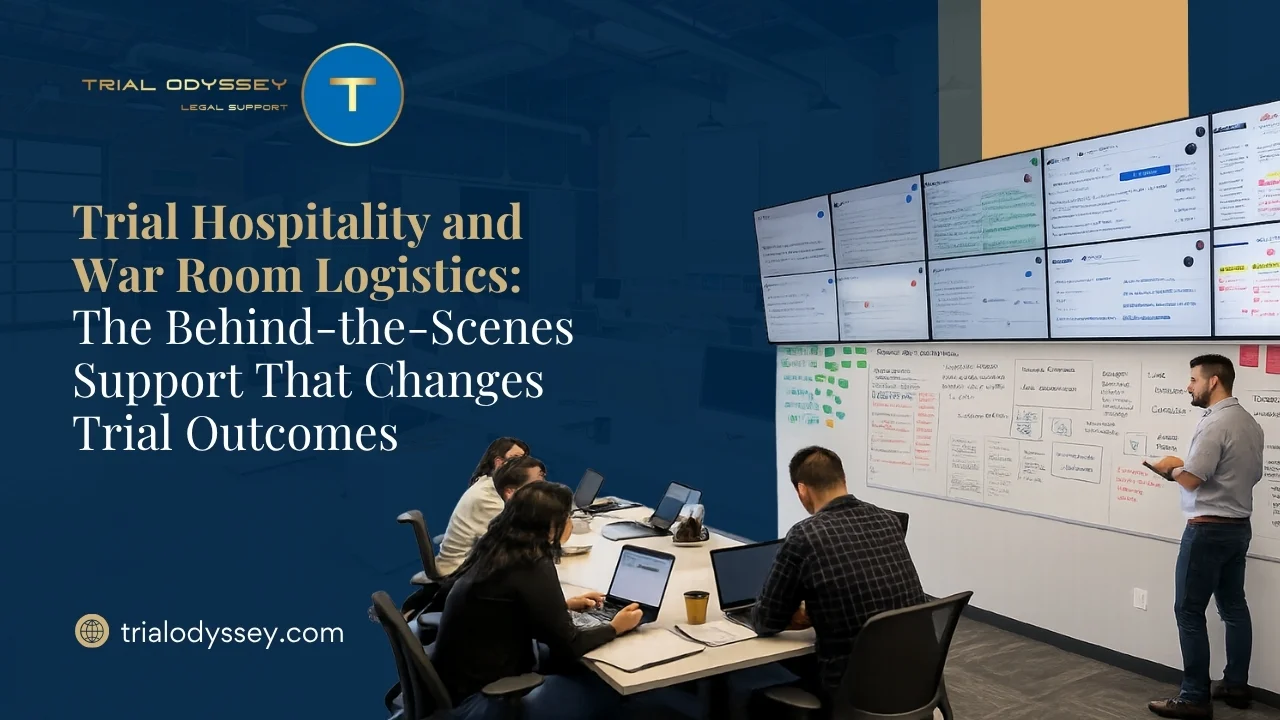
What a Trial War Room Actually Needs to Do
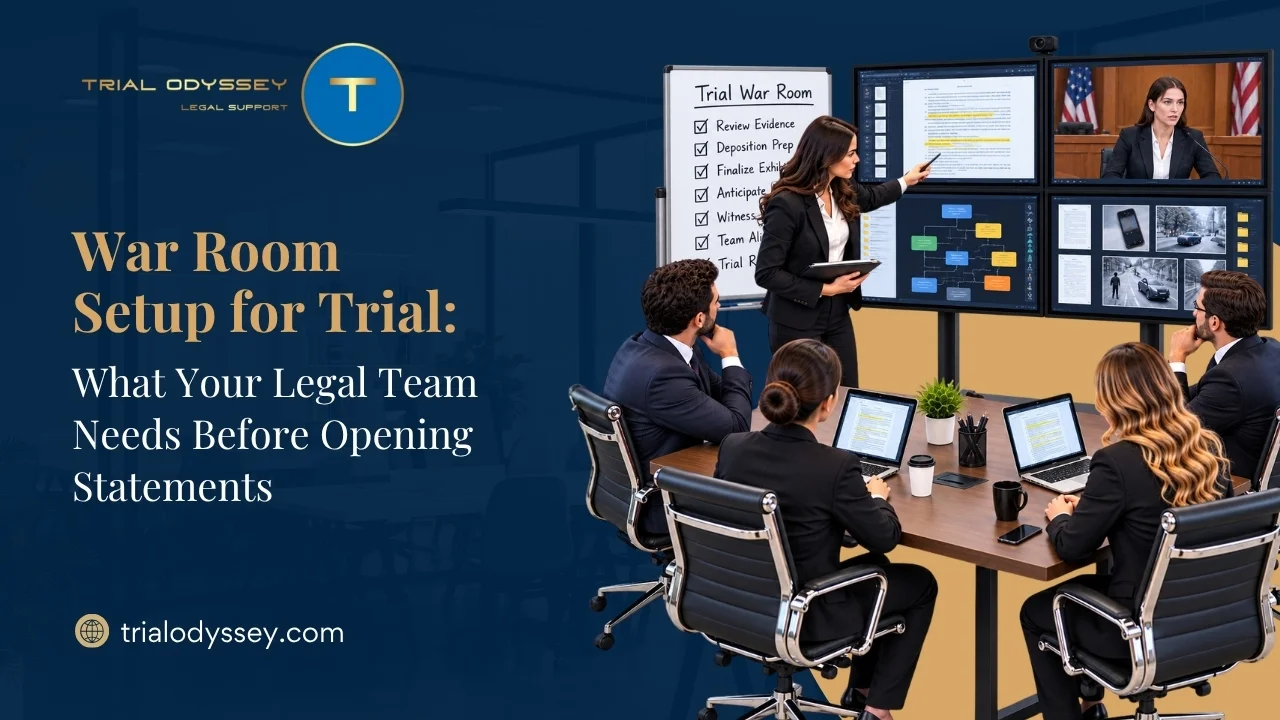
A war room is not a conference room with extra chairs.
It is a command center. It needs to support simultaneous work across multiple workstreams: document review, exhibit preparation, witness preparation, strategy sessions, and urgent print jobs, often happening at the same time in the same space. It needs to be secure. It needs to be reliable. And it needs to be close enough to the courthouse that the logistics of moving between the two do not eat into preparation time.
Why Physical Layout Matters
The physical layout matters more than most teams realize before they experience a poorly organized one. Dedicated zones for different functions, whether printing and copying, technology and AV, document storage, and attorney workspaces, reduce the friction of a long trial day. A table covered in unsorted binders next to a printer that is not networked to the main workstations is not a war room. It is a source of daily frustration compounding over weeks.
Trial War Room Checklist
Before trial begins, legal teams should confirm that their war room includes:
Technology and Network Setup
- Secure private WiFi
- VPN access
- Backup internet connection
- Tested courtroom AV compatibility
- Backup laptops and chargers
Printing and Document Management
- High-capacity printers
- Organized exhibit storage
- Backup copies of key exhibits
- Witness binders
- Admitted exhibit tracking system
The Network Question
This is the piece that gets underestimated most consistently.
A trial team handling active litigation is transmitting and receiving privileged communications, confidential case materials, draft arguments, and sensitive client information continuously throughout the trial. The hotel’s guest network is not a secure environment for any of this. Neither is a consumer router brought from the office.
The ABA’s 2023 Cybersecurity TechReport found that 29 percent of law firms reported a security breach that year, up from 27 percent the year before. Only 42 percent of firms use two-factor authentication on remote access systems. A trial team connecting to hotel guest WiFi is operating with less security than most firms maintain for routine office access, and doing so while handling some of the most sensitive materials in an active matter.
Trial Teams Often Operate With Less Security Than Their Offices
A properly configured war room network uses enterprise-grade firewall hardware, secured wireless access points with restricted access, wired connections for workstations handling the most sensitive materials, and VPN connectivity back to the firm’s office or datacenter. It is set up before the team arrives and tested to verify it is working correctly. It has someone responsible for monitoring it throughout the matter.
Trial Odyssey configures and manages secured war room networks for trial teams, handling setup, testing, and ongoing support so the team can operate with the same security they have at the firm without having to manage the infrastructure themselves.
Trial Hospitality and Concierge Support
Why It Matters More Than It Sounds
The phrase trial hospitality does not always land well with attorneys who think of themselves as serious professionals focused on winning cases.
The reframe is simple: trial hospitality is about keeping the team functional.
A multi-week trial in an unfamiliar city is a logistical operation. The team needs accommodation close enough to the courthouse and the war room to minimize commute time. They need reliable catering that keeps them fed during the long hours without requiring anyone to leave the war room to find food. They need printing and copy services available at 6am and at midnight. They need someone who knows the local environment and can handle the unexpected: a last-minute print run, a change in hotel reservations, transportation coordination, supply procurement.
Hotel and Accommodation Logistics
Proximity matters. The difference between a hotel two blocks from the courthouse and one twelve minutes away by car does not sound significant until it is 7:15am and court starts at 8:00 and someone needs to be back at the war room by 7:45.
Negotiating room blocks with hotels, managing reservations as the trial schedule changes, ensuring that the rooms the team is using have the connectivity and workspace features attorneys actually need, and handling the inevitable changes that occur when trial schedules shift: these are coordination tasks that take time and attention away from case preparation when they fall on the legal team rather than a support function.
Catering and Daily Operations
U.S. Legal Support has noted that war room resources should go beyond equipment to account for the human needs of the team: meals, toiletries, anything that reduces unplanned trips away from the work. That observation comes from experience with what happens when these things are not managed.
Trial teams eating well, at regular intervals, without having to coordinate food themselves, perform better over the course of a long trial than teams that are skipping meals or making do with whatever is available. This is not a comfort consideration. It is a performance one.
Daily catering coordination, supply management for the war room, and the kind of on-call concierge availability that handles the unexpected without requiring attorney attention are the operational backbone of a well-run trial support operation.
The Cost of Getting This Wrong
Trial teams that underinvest in logistics tend to absorb the cost in ways that are hard to measure but very real.
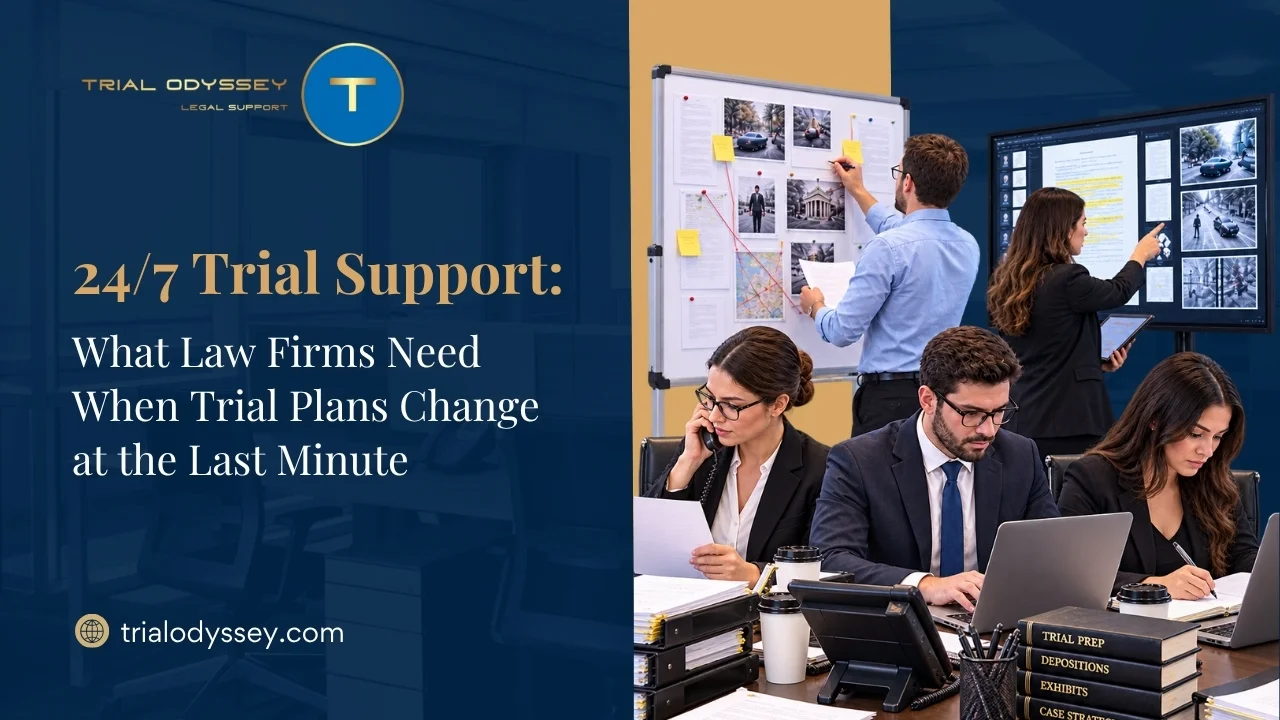
Associates spending time on operational problems instead of case preparation. Senior attorneys managing hotel reservations instead of reviewing deposition transcripts. Network failures creating security concerns or delays at critical moments. Fatigue accumulating over a long trial and degrading performance in ways the team notices but cannot fully correct.
The Real Value Is Attention Preservation
Teams that use professional trial support services consistently report savings of 30 to 40 percent compared to handling logistics in-house, according to industry data from specialized providers.
The more significant factor is not the cost saving but the attention saving. A trial team that is fully focused on the case from the first day to the last day is in a different position from one that has been managing operational problems throughout.
What Full-Service Trial Support Looks Like
The distinction between a trial support provider and a vendor is what gets handled without being asked.
A vendor supplies what is ordered. A trial support partner anticipates what is needed, flags problems before they become crises, and handles the details that would otherwise fall through the gaps between different service providers.
What Effective Trial Support Includes
That means a war room that is set up and tested before the team arrives, not assembled while they are trying to prepare. It means catering that appears without requiring coordination. It means print jobs completed overnight and ready in the morning. It means a network that is working and secure from day one.
Behind-the-Scenes Work Shapes Results
Trial Odyssey provides trial hospitality and concierge support alongside the full range of trial technology services, managing the operational infrastructure of a trial so the legal team can direct its full attention toward winning the case. The behind-the-scenes work is not separate from the outcome. It is part of what makes the outcome possible.