There is a moment in most cases that does not look important.
A pause before answering. A glance sideways. A tone that shifts slightly when a question gets too close.
In transcripts, that moment disappears.
On video, it stays.
That is where legal videography quietly changes how litigation is experienced. Not loudly. Not dramatically. Just… by keeping what usually gets lost.
And yet, not all legal videography is the same.
A deposition recording is not a courtroom recording. They look similar from the outside. Camera. Microphone. Someone speaking.
But they behave differently.
What Legal Videography Actually Captures
It is easy to think video just records what happened.
It doesn’t.
It captures how it happened.
Posture. Hesitation. Confidence. Evasion. Small shifts that do not translate into written words. Sometimes not even into memory.
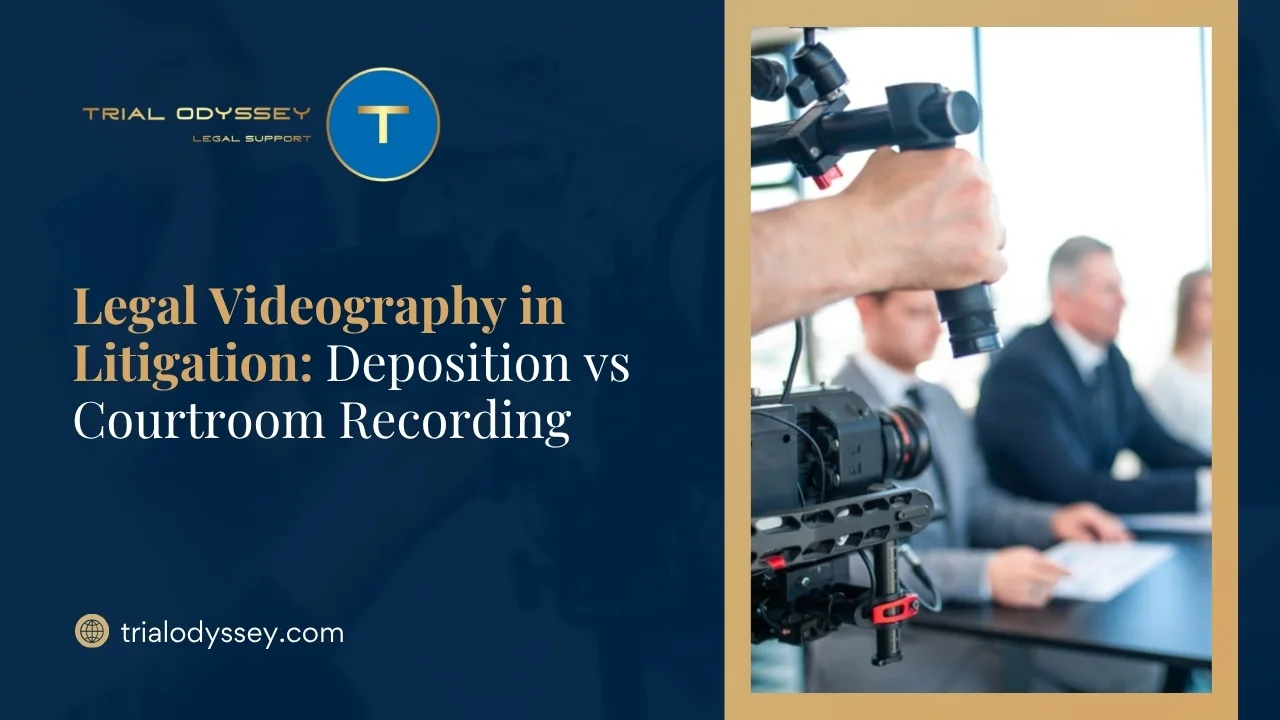
A certified legal videographer is not just pressing record. They are framing, ensuring visibility, maintaining continuity, following standards so that what is recorded can actually be used later.
Because if it cannot be used, it does not matter how well it was recorded.
Deposition Videography Feels Controlled
Depositions happen in quieter spaces.
Conference rooms. Offices. Sometimes remote setups now. Fewer people. Fewer interruptions.
The environment is structured, almost contained.
A deposition videographer works within that control.
Camera placement is deliberate. Lighting adjusted. Audio tested. The goal is clarity without distraction. Nothing flashy. Nothing unnecessary.
The witness speaks. The attorney asks. The record builds steadily.
It feels linear.
But even here, small things matter.
A delay before answering. A change in tone halfway through. A moment where the answer becomes less certain.
These details often become more important later than they feel in the moment.
Courtroom Recording Feels Different
Courtrooms do not stay controlled for long.
Multiple voices. Interruptions. Objections. Movement across the room. Attention shifting constantly.
Recording in that environment is not just technical.
It is reactive.
A legal videographer in court adjusts continuously. Framing changes. Audio levels shift. Focus moves between speakers. Sometimes quickly.
There is less predictability.
And because of that, courtroom recording is less about perfection and more about coverage.
Capturing everything that might matter, even if it does not seem important at the time.
The Purpose Is Not the Same
Deposition Recording: Preservation of Testimony
Depositions are about preservation.
Creating a clean, accurate record of testimony that can be reviewed, challenged or presented later. Structure matters more than speed.
Courtroom recording is about documentation.
What happened, how it unfolded, what was said in context.
The difference is subtle, but it changes how videography is approached.
One builds evidence.
The other captures proceedings.
Why Standards Matter More Than Equipment
Anyone can record video.
That is not the issue.
The issue is whether that recording holds up.
Role of a Certified Legal Videographer
A certified legal videographer follows specific protocols. Time stamping. Sworn statements. Continuous recording without unexplained gaps. Proper handling of files.
These are not formalities.
They determine whether the video is admissible, credible, usable.
Without that, it becomes just footage.
Remote Depositions Have Changed the Setup
Something else has shifted.
Depositions are no longer always in the same room.
Remote setups. Video conferencing. Witnesses appearing from different locations.
This adds another layer.
Challenges in Remote Legal Videography
Now the videographer is not only managing camera and audio, but also connectivity, screen recording, sometimes multiple feeds.
Control becomes fragmented.
Which makes consistency harder.
And consistency is what gives video its value.
What Gets Lost Without Video
Transcripts are efficient.
Searchable. Precise. Easy to reference.
But they flatten everything.
Tone disappears. Expression disappears. Timing disappears.
And sometimes, meaning shifts because of that.
Legal videography brings those elements back.
Not to replace transcripts.
But to complete them.
When Video Becomes Critical
Challenges in Remote Legal Videography
Not every case needs video equally.
But in some situations, it changes everything.
Witness credibility. Emotional responses. Complex explanations that need visual support.
These are moments where written records fall short.
And video becomes not just helpful, but necessary.
Final Reflection
Legal videography is often treated as a supporting function.
Something that happens alongside the case.
But it shapes how the case is seen later.
Depositions capture controlled testimony. Courtroom recordings capture live proceedings. Both serve different purposes.
And both rely on getting the small details right.
Because in litigation, it is rarely the obvious moments that decide outcomes.
It is the ones that almost went unnoticed.
FAQs
1.What is legal videography in litigation?
Legal videography involves recording depositions, trials, and legal proceedings to capture visual and audio evidence, ensuring accurate documentation beyond written transcripts.
2.What does a deposition videographer do?
A deposition videographer records witness testimony in controlled environments, ensuring clear audio, proper framing, and compliance with legal standards for admissibility in court.
3.What is a certified legal videographer?
A certified legal videographer is trained to follow legal recording protocols, ensuring videos meet admissibility standards, including proper documentation, time stamping, and uninterrupted recording practices.
4.How is deposition videography different from courtroom recording?
Deposition videography is structured and controlled, while courtroom recording is dynamic and reactive, capturing real-time proceedings with multiple participants and unpredictable interactions.
5.Why is legal videography important in litigation?
Legal videography preserves tone, behavior, and visual cues that transcripts miss, helping courts better assess credibility, context, and the overall impact of testimony.
6.Are remote depositions reliable for legal videography?
Yes, remote depositions are reliable when managed properly, but they require careful handling of connectivity, recording consistency, and multiple video feeds to maintain quality and admissibility.
7.What makes legal video admissible in court?
Legal video must follow strict protocols, including continuous recording, accurate time stamping, proper documentation, and certification by a trained videographer.