The Decision Nobody Makes Until It Is Almost Too Late
Most trial teams spend months preparing the case. They spend the last two weeks scrambling to figure out how they are going to present it.
The technology questions, which projectors, which monitors, how the network is going to work in a hotel war room three states away, whether the courtroom’s existing AV system is compatible with the presentation software, tend to get deferred until they cannot be deferred anymore. By then, the options have narrowed, the lead times are short, and the margin for error is thin.
The choice between renting trial technology and relying on in-house equipment is not a procurement decision. It is a strategic one. Getting it wrong does not just create inconvenience. It creates risk on the day when the team can absorb no additional risk at all.
What In-House Technology Actually Costs
Law firms that maintain their own trial technology tend to underestimate the true cost of that choice over time.
Equipment depreciates. The laptop that was current three years ago is no longer running the latest version of the trial presentation software reliably. The projector that worked fine at the last trial is now producing a dimmer image because the bulb has aged. The network hardware that the IT department put together for the last major matter has not been updated since.
These are not hypothetical concerns. Trial technology has a particular failure mode: it works in the office and fails in the field. The controlled environment of the firm’s IT infrastructure does not replicate what a team encounters when they arrive at a courthouse in an unfamiliar jurisdiction, set up in a hotel conference room being used as a war room, and try to connect to a network they do not control.
What Equipment Rental Actually Provides
The practical case for renting trial technology comes down to three things: currency, flexibility, and support.
Currency
A specialized equipment rental provider maintains current hardware and software because their business depends on it. When they deliver a projector, it works at full capacity. When they configure a network, it is built with current security standards. When they bring a presentation workstation, it is running the version of the software the trial team is using.
According to U.S. Legal Support’s 2025 survey, only about 27.9 percent of firms managed trial technology entirely in-house as of 2024, and that percentage has been declining year over year. The trend reflects a recognition that courtroom technology has become specialized enough that general IT infrastructure is not the right tool for it.
Flexibility
Every trial is different. A short hearing before a judge requires different technology than a multi-week jury trial. A case tried locally in familiar surroundings requires different logistics than one tried in a jurisdiction the team has never worked in before.
Rental allows the technology footprint to match the actual needs of the specific matter. The team is not constrained by what the firm owns. They can configure the exact setup the case requires, whether that means a single monitor at the podium or a full courtroom deployment with monitors at the judge’s bench, the witness stand, counsel tables, and the jury box.
On-Site Support
This is the factor that is hardest to replicate in-house and the most important when something goes wrong.
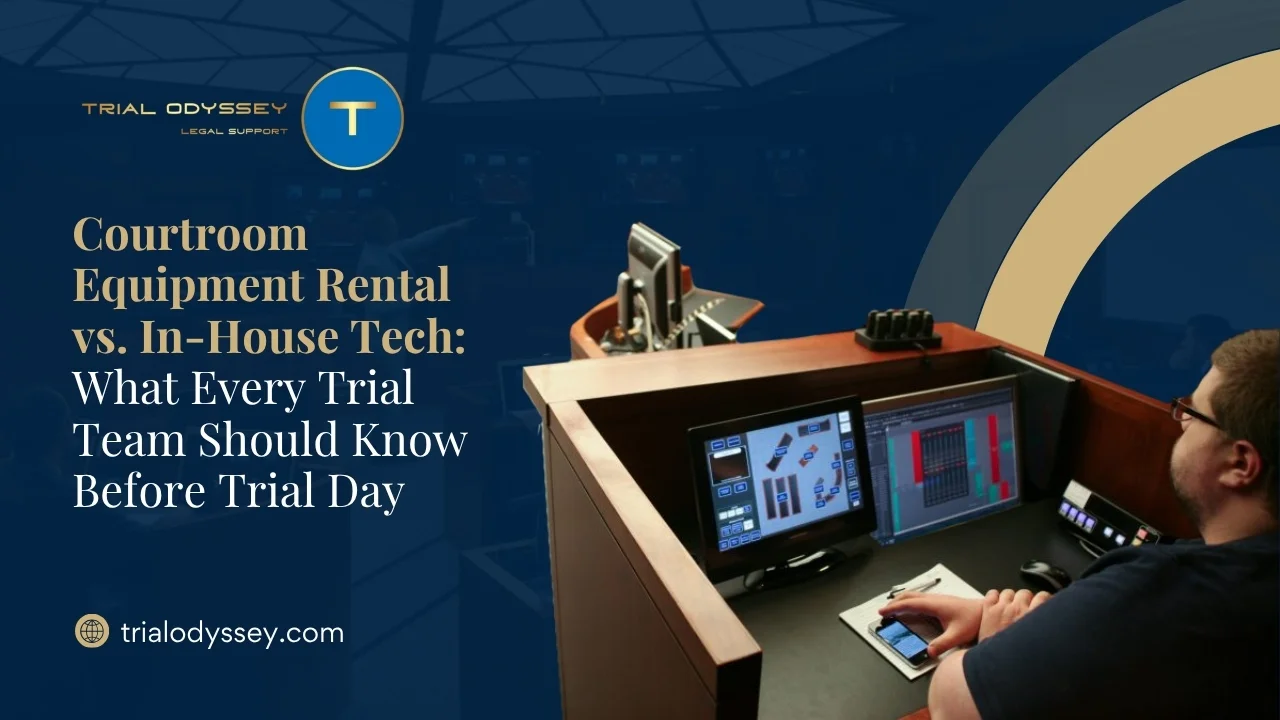
A hot-seat operator from a specialized provider is not just someone who knows the equipment. They know what can go wrong during a trial presentation and they have responses ready before anything fails. They arrive early, test every connection, keep backup devices ready, and stay available for the duration. When an exhibit will not display, when a video clip stutters, when opposing counsel challenges a connection setup, the tech specialist handles it while the attorney stays focused on the argument.
A 2024 study cited in litigation support literature noted that technology-trained legal teams were 40 percent less likely to encounter exhibit delays caused by technical issues during trial. According to industry data, firms that outsource trial technology consistently report fewer technical disruptions and significantly lower total cost compared to the combination of equipment maintenance, personnel deployment, and emergency problem-solving that in-house management requires.
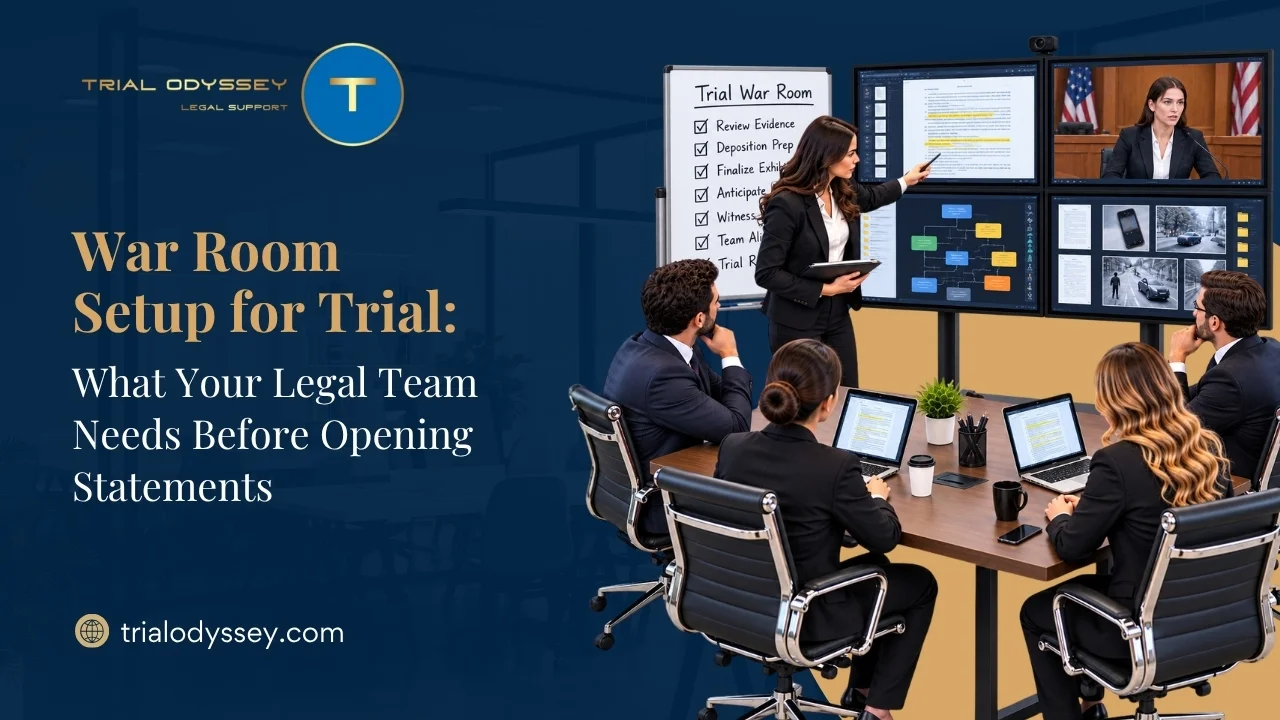
What a Secured War Room Network Actually Requires
The network question deserves specific attention because it is the piece that is most often underestimated.
A trial team working out of a hotel war room is handling privileged communications, confidential case materials, and sensitive client information on a daily basis. The hotel’s guest WiFi is not a secure environment for any of that. Neither is a consumer-grade router brought from the office.
The Growing Cybersecurity Risk for Law Firms
The ABA’s 2023 Cybersecurity TechReport found that 29 percent of law firms reported a security breach in 2023, up from 27 percent the year before. Connecting to unsecured networks during active litigation is not a theoretical risk. It is a documented category of exposure that professional responsibility frameworks treat seriously. Attorney-client privilege and work product protection do not have a carveout for hotel WiFi.
A properly configured war room network uses dedicated hardware with enterprise-grade firewall and switching, secured WiFi access points, VPN connectivity back to the firm’s datacenter or office, and individual device management that prevents unauthorized access. It is set up and tested before the team arrives, and it has someone responsible for monitoring and troubleshooting it throughout the matter.
Where Trial Odyssey Fits In
Trial Odyssey deploys equipment and on-site network and IT support for trial teams nationally, handling everything from courtroom AV setup and hot-seat presentation to war room network configuration and 24/7 technical availability throughout the matter. The technology decisions made before trial day determine what is possible on trial day. Making those decisions early, with a team that specializes in courtroom technology, is the part of trial preparation that protects everything else.